Spark Tank Innovation Challenge 2025 PATMDTA Recipients
Discover groundbreaking ideas from our scholars—advancing patient care, safety, and operational excellence across Nuvance/Northwell Health.
The Spark Tank Innovation Idea Challenge, where innovation meets healthcare. This unique platform invited Nuvance/ Northwell Health employees to bring forward their groundbreaking ideas aimed at enhancing patient care, safety, and operational efficiency across our network.
🥇First Place:
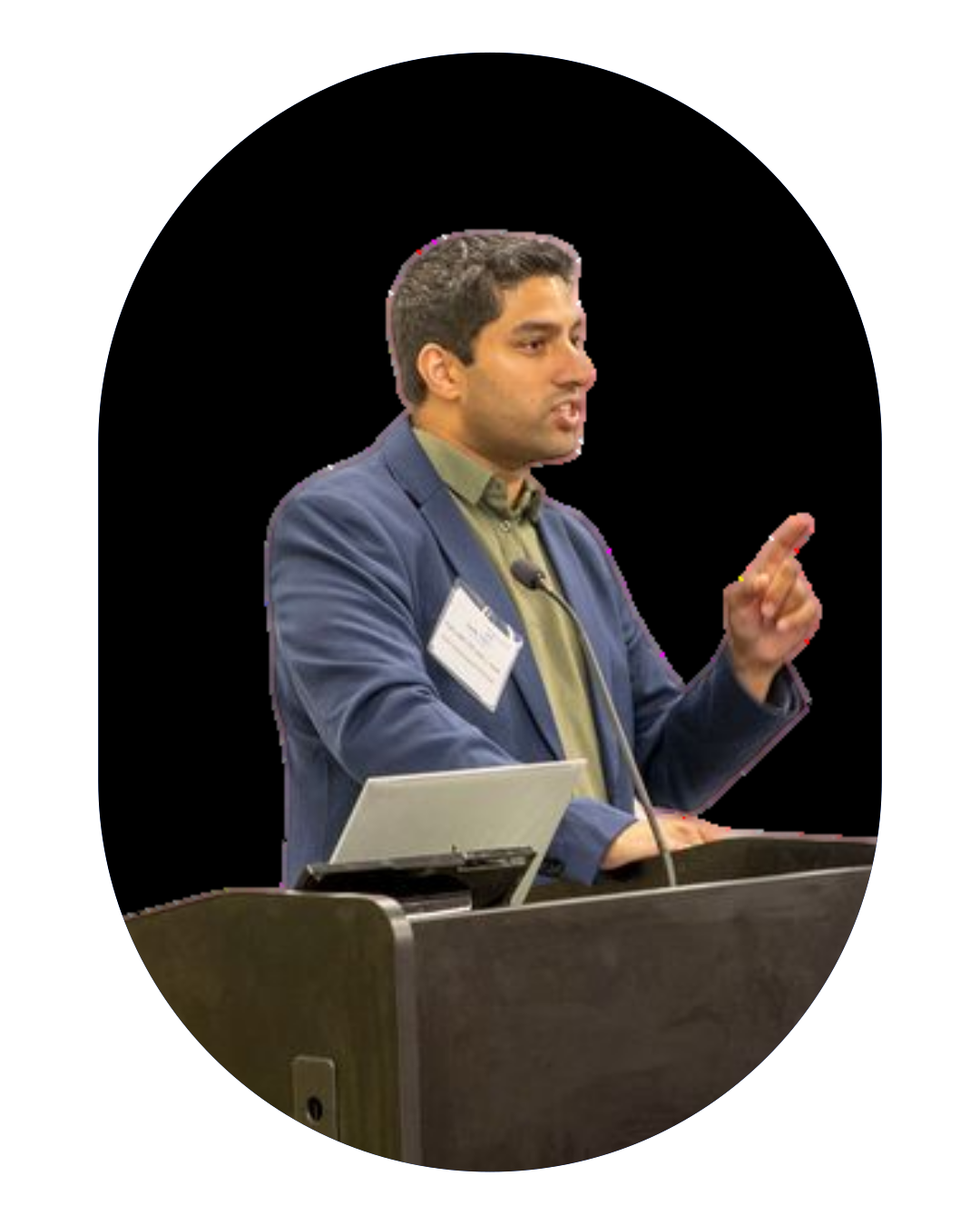
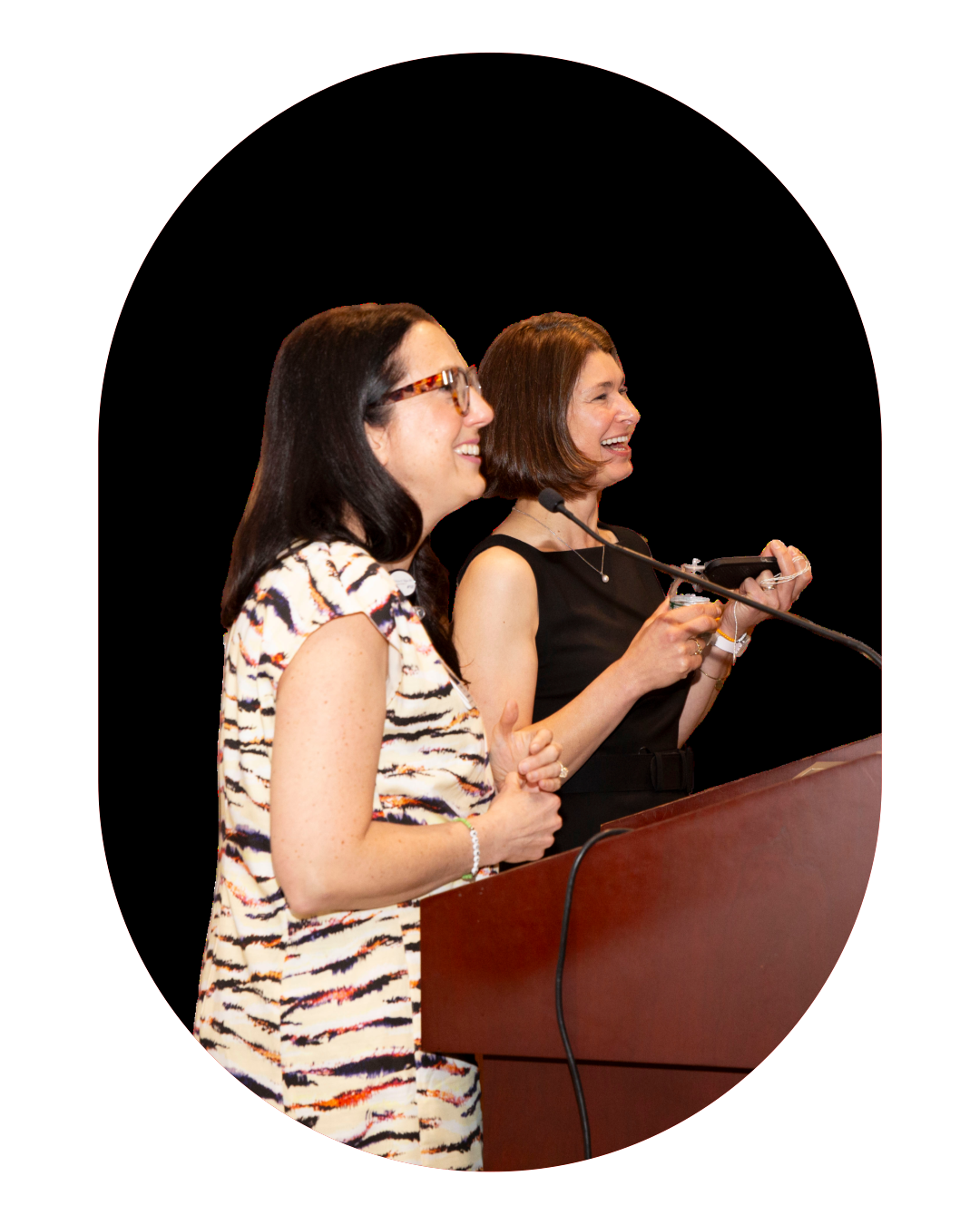
Erin McLaughlin, MD, MPH – Machine Learning Model for Predicting Violent and Aggressive Behavior in Hospitalized Medical and Surgical Patients
This innovation leverages machine learning to analyze real-time patient data to identify patients at heightened risk of violence.
The Machine Learning Model for Predicting Violent and Aggressive Behavior in Hospitalized Medical and Surgical Patients, developed by Dr. Erin McLaughlin, Dr. Diane Kantaros, Robin Ashley, and Joan Climes, tackles the escalating crisis of workplace violence in healthcare. With nearly two in three healthcare workers experiencing workplace violence, proactive solutions are urgently needed. This innovation leverages machine learning to analyze real-time patient data-including medical history, vital signs, medications, clinical notes, and environmental factors-to identify patients at heightened risk of violence. Unlike traditional tools that rely on subjective, retrospective evaluations, this model dynamically detects subtle changes that may signal imminent aggression. Integrated into electronic health records, the system can push early risk notifications to care teams, enabling timely interventions that protect both patients and staff. By improving prediction accuracy, automating alerts, and enhancing decision-making, the model strengthens workplace safety, reduces harm, and supports staff well-being.

🎖️Second Place:
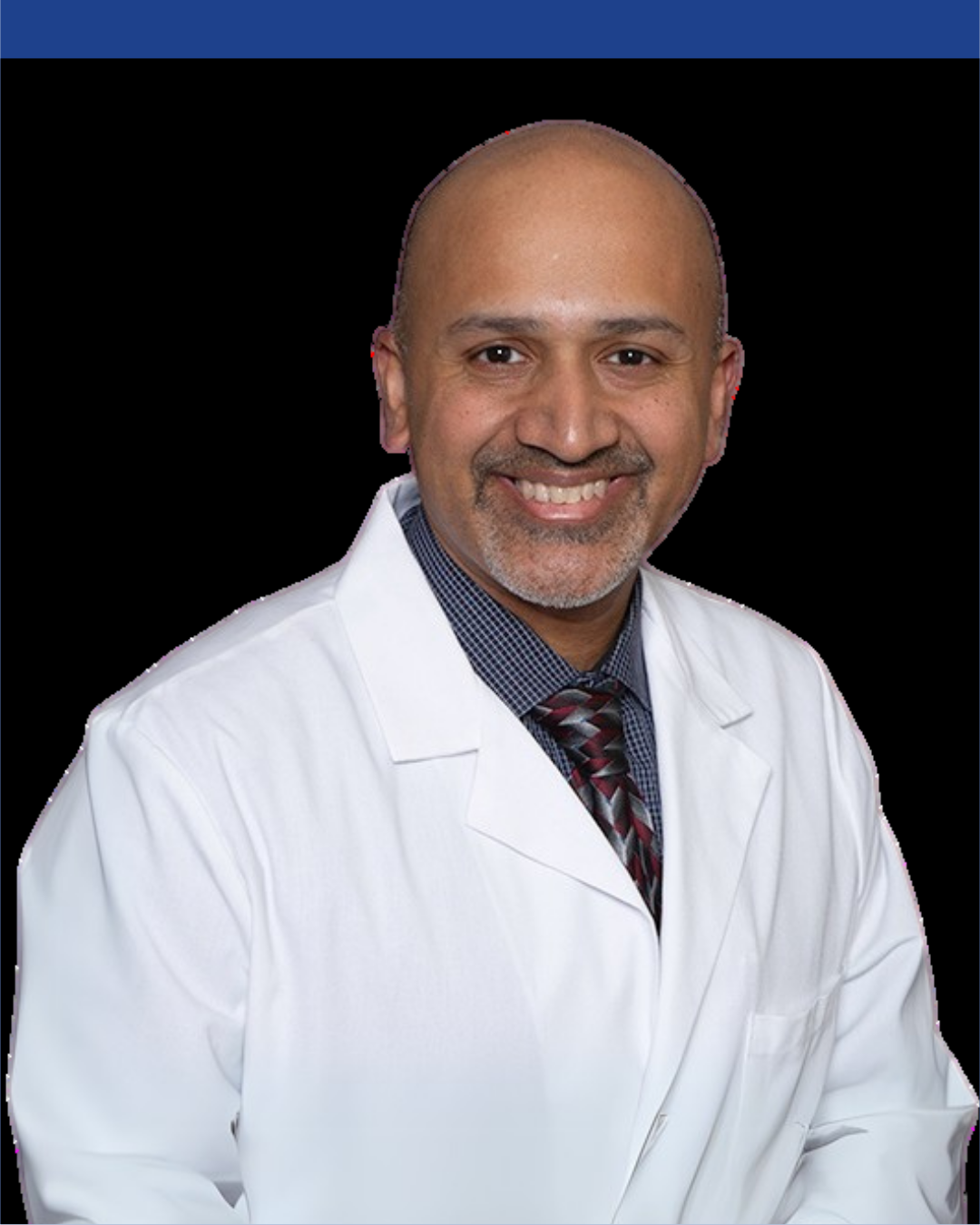
Ramanathan Seshadri, MD – AI-Powered Feedback and Performance Analytics for Laparoscopic Simulation
Al-driven laparoscopic training tool delivering instant, objective performance feedback.
The Al-Powered Feedback and Performance Analytics for Laparoscopic Simulation, developed by Dr. Karan Kumar, Dr. Ramanathan Seshadri, and Dr. Krishan Patel, addresses a critical gap in surgical education: timely, objective, and scalable feedback for residents. Traditional high-fidelity simulators are costly, inconvenient, and dependent on faculty availability, while formal FLS assessments require travel and scheduling. This innovation leverages Al-driven video analysis to provide immediate, personalized feedback without specialized hardware. Residents record themselves performing peg transfer tasks using color-coded instruments, and the system’s computer vision extracts metrics such as path length, speed, idle time, collisions, and smoothness. Within minutes, it generates a detailed PDF report with classifications, speed graphs, and targeted recommendations. The platform mirrors FLS scoring standards, enabling residents to prepare effectively for national exams while conserving faculty resources. By supporting competency-based training and Entrustable Professional Activities, this low-cost, faculty-independent tool modernizes surgical education, embedding real-time, data-driven performance assessment directly into daily practice.


🌟Nomination:
Candice Calhoun, MHS, PA-C –Emergency Department Resource Guide
This innovation centralizes all essential resources into one intuitive, clinician-designed platform accessible instantly on mobile devices.
The Emergency Department Resource Guide: Streamlining Critical Access When Seconds Count, developed by Candice Calhoun, addresses a major barrier in emergency medicine: fragmented and time-consuming access to critical resources. Clinicians often waste precious minutes searching across multiple platforms, paper lists, or personal devices for on-call schedules, clinical pathways, and contact information-time that detracts from patient care and compromises efficiency. This innovation centralizes all essential resources into one intuitive, clinician-designed platform accessible instantly on mobile devices. By replacing scattered portals and outdated printouts, the guide ensures accurate, up-to-date information while simplifying workflows and reducing cognitive overload. It accelerates onboarding for new staff, enhances clinical efficiency, and fosters real-time adaptability through feedback and update mechanisms. Already implemented as a mobile-friendly website in active use, the project demonstrates both adoption and effectiveness. With Spark Tank support, it can evolve into a robust mobile application serving the entire care team and setting a new standard for emergency department resource management.
🌟Nomination:
Akash Shah, MD – MediMate: A Personal AI Scribe for the Patient
Al-powered patient scribe delivering clear, physician- approved summaries and visuals.
Many patients struggle to fully understand and remember details about their care. Complex diagnoses, multiple specialists, and cognitive challenges make staying involved even harder. Existing tools like discharge summaries and after-visit instructions provide information, but they don’t offer real-time, easy-to-understand updates during a hospital stay or clinic visit. Dr. Kanishka S Kamath and Dr. Akash Shah have proposed an Al-powered tool that transforms physician-patient conversations into plain- language summaries. Unlike the available Al scribes, it captures key points, supports multiple languages, organizes information with checklists, and makes updates accessible anytime. Leveraging agentic Al, it can also automatically generate and integrate personalized checklists, ensuring that patients and providers have actionable steps tailored to each care plan. It is designed for use in both inpatient and outpatient settings, and ensures patients stay informed throughout their entire care journey. It reduces miscommunication and improves adherence, via which, it helps hospitals enhance quality metrics, streamline workflows, and assists in reducing the readmission rates. By improving understanding and supporting better follow-through, the tool empowers patients, strengthens shared decision-making, and boosts overall satisfaction with care. With its ability to seamlessly integrate into patient portals, this application has the potential to redefine how patients access, track, and engage with their health information.

💫Honorable Mention:
Akash Shah, MD, Beth A. West, EdD, and Robyn Scatena, MDAI/NLP – Interaction Feedback Assisted Realtime UME/GME Learner Patient Interaction Feedback