
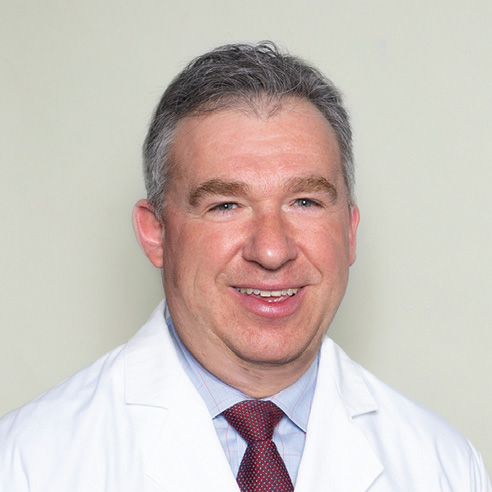
Raymond Raut, MD
Danbury Hospital
Raymond.Raut@nuvancehealth.org
Bio
Ray Raut was born in Bucharest, Romania on August 3rd 1972. He was a very curios child, loved logic and reasoning. He was prone to challenge unreasonable, unfair and discriminative rules, which sometimes landed him in trouble with a very top down and leveling educational system in communist Romania. He enjoyed most science subjects in school, especially physics after reading in 6th grade a Fundamental of Physics textbook by David Halliday that he
haphazardly found on a teacher’s bookshelf. He furthered his education at St. Sava National College in Bucharest the oldest and arguably the best high school in the country. In 1991 he passed a very competitive admission exam to medical school and enrolled at Carol Davila University of Medicine and Pharmacy. In early medical school he loved physiology and molecular biology and signed up for extracurricular activities like the Neurobiology research group. In later years of the medical school he discovered how much he liked interacting with patients. In 1997 he graduated medical school and in 1998 he interviewed for a residency position. What was supposed to be a long interview season came to an abrupt end during his only 3rd interview, with the Internal Medicine Residency Program at Danbury Hospital, when he instantly fell in love with the people and the place. In his residency training he had the fortune to discover a most amazingly diverse group of bright and eager to learn physicians originating from all the four corners of the world. He enjoyed the positive competition, the cultural exposures and most importantly the friendly environment. In 2002 he entered a Nephrology Fellowship training at SUNY at Downstate in Brooklyn, NY. While there he was exposed to high volume, high intensity and acuity medicine and furthered his skills as a teacher while accruing some leadership skills as a Chief Fellow. In Brooklyn he also discovered how, even in the most developed country in the world and in the most advanced and patient centered medical system ever created, some patients don’t have equal access to services and how racial and socio-economic discrimination translates in poor health and lots of unnecessary suffering. In 2004 he took a position as a Staff Nephrologist in Jamestown, NY where he worked with a medically underserved population in the so-called “rust belt” and also Amish country where he learnt about new medical and social problems. In 2006 he was very excited to return to what he sees as his Alma Mater – Danbury Hospital – where he reconnected with medical education which remained the most important aspect of his professional life. He has been closely involved with the Internal Medicine Residency since, part of the core faculty and standing member of the clinical competency committee. Here he continued to develop as a physician, a scholar, a student in the multiple educational opportunities available to him like Physicians Leadership Course and most recently Dr. Patricia Tietjen Teaching Academy. He remains a lifelong disciple of humanistic medicine practice and hopes to give back to a society and a community that was so generous to him and his family and to continue to be a good colleague and teacher.